SR-1 Freedom Mission Could Fulfill NASA's 70-Year Dream of Putting Nuclear Reactors in Space
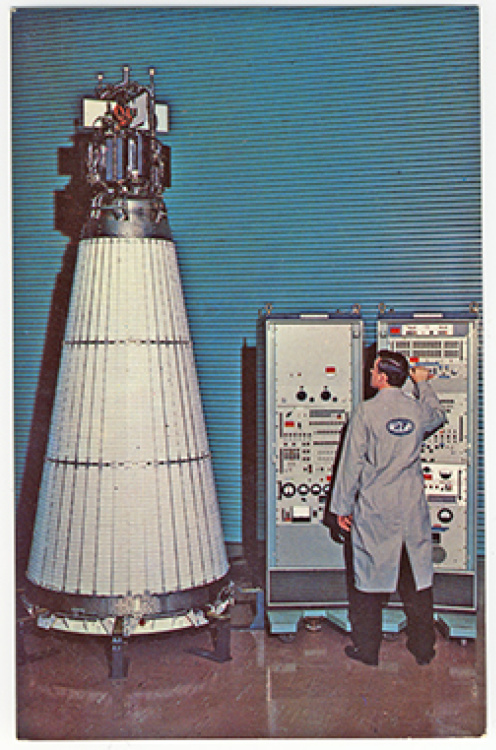
Just a few days ago, NASA announced a bold plan to send a brand-new vehicle to Mars in 2028. It will carry the planned Skyfall payload, full of Ingenuity-class fliers, which should greatly increase scientists' understanding of the Red Planet's composition—but it's the ship's power and propulsion system that are truly exciting.Called the SR-1 Freedom, this latest spacecraft will use an electric propulsion system originally intended for use repositioning asteroids, then repurposed for a canceled lunar space station called Gateway, and now repurposed again for Mars. In terms of propulsion, it's essentially just a greatly scaled-up version of an ion thruster. In classical ion thrusters, the type on many current satellites, solar panels generate a small current of electricity, which is used to create a weak electromagnetic field inside an open reaction chamber. A solid puck of fuel slowly diffuses ions into this chamber, which are then shot toward the magnetic field, creating an equal thrust in the opposite direction. This official NASA render shows a moon base (phase 3 no less) hypothetically powered by nuclear reactors on the lunar surface. Credit: NASA The SR-1 propulsion system, called the Power and Propulsion Element (PPE), is a cluster of several large thrusters of this type. But there are two important ways in which this idea does not easily scale. One is that a solid puck of fuel can't provide ions quickly enough for meaningful thrust, and so it has been swapped for tanks of compressed Xenon gas, which can fill the reaction chamber much more quickly.The other problem was harder to solve: a source of far, far more electricity. Not only would creating thousands of times more power require thousands of times more surface area of generative panels, but these panels could deliver less current the further they were from the Sun. For a long-distance Mars mission, fully electric propulsion will require a new system that delivers a lot of power wherever it's needed.Enter, nuclear power. The use of nuclear power in space dates back 70 years or more at NASA alone; it was originally codified in the Systems for Nuclear Auxiliary Power (SNAP) program, started all the way back in the 1950s. The basic finding was that space nuclear made no sense for missions like the ones they were planning at the time, like the Apollo missions to the Moon. Testing of SNAP 10-A, originally intended to produce 500 Watts or more of electricity for a year or longer. Credit: NASA Given the launch weights and difficulties involved, the idea only really made sense for propulsion in the context of a mission to another planet—like, for instance, Mars.This is distinct from existing nuclear technologies like the Radioisotope Thermoelectric Generators (RTGs) onboard rovers like Curiosity and Perseverance; these do not actually initiate a fission reaction but instead exploit the natural decay of plutonium to generate very small amounts of electricity.This has the upside of being small, light, and extremely long-lasting, but it creates a measly 110 watts of current. That's compared to the 20,000 watts (20kW) to be created by the proposed reactor onboard the Freedom.This reactor will be held at a safe distance from the spacecraft's core by a long truss, helping prevent radiation leakage from interfering with computers inside the capsule. Of course, this will also help prevent radiation leakage into a hypothetical future crewed compartment.The reactor is also designed to scale up to larger sizes to power larger ship engines and even permanent installations, such as the proposed Lunar Reactor 1. This would launch by 2030, and produce up to megawatts of power for a permanent Moon base.It seems like an ambitious timeline for both the ship and the installation, but such progress will be necessary if NASA's equally ambitious goals for the Moon and Mars are going to become a reality.