五度易链产业数字化管理平台
全国首个跨境电商零售出口“前置监管仓”落地威海

3月2日,全国首个跨境电商零售出口“前置监管仓”正式在威海落地启用。当天,在威海临港区某电商平台物流仓内,工作人员正对跨境电商出口包裹打包分拣。沿着传送带,这些包裹进入海关跨境电商零售出口“前置监管仓”办理通关手续,只需几秒钟的时间,包裹便可完成申报放行,进而就地装箱,搭乘威海国际班轮发往国外。这一创新模式首次将海关监管深度嵌入跨境电商平台仓库生产作业流程,实现了“仓储、分拣、申报、查验、装箱、转关”一站式办理,有效破解了传统监管模式下“出货—装箱—运抵—查验—二次装箱—装船”等环节多、时效长、成本高的痛点。“一个集装箱往往有成千上万件包裹,因为规格大小不一、摆放没有规律,查验时需要在集装箱内逐件翻找,往往耗费数小时,产生近千元费用,并且极易错过船期、造成甩货风险。”青岛海关所属威海海关驻邮局办事处主任潘吉红说。如今,威海海关创新探索出“前置监管仓”模式,海关在电商平台物流仓内按照一个集装箱设置一个库位,包裹经过传送带运达该库位时是平铺状态,运单号清晰可见。根据货物查验状态,海关监管人员可及时抽检包裹,没有问题的包裹几秒钟便可放行进入装箱环节,有效缩短了通关时间、降低了通关成本。据悉,威海还在同步打造跨境电商零售出口“退货中心仓”,预计3个月后,将实现跨境电商零售出口“前置监管仓”、“退货中心仓”双仓联动,形成“出口快通、退货快回”双向便利闭环,进一步激发跨境电商活力,吸引更多平台企业、物流企业“由威出海”。(记者 郑莉 通讯员 杨妍 员雯)

来源:大众日报发布时间:2026-03-05
山东印发机械化技术指导意见 春耕春管用上“机械化”套餐

为做好主要农作物春耕备耕、田间管理等工作,省农业农村厅日前印发《2026年主要农作物春耕春管机械化技术指导意见》,针对冬小麦、棉花、春花生、马铃薯、大蒜等农作物,分别给出机械选用及作业的具体指导。小麦镇压与划锄方面,由于今年小麦普遍苗小,《意见》推荐选用自走式镇压机、浅锄型机具或镇压划锄一体机作业。镇压作业集中在小麦返青至起身期,选择无霜天气上午10点后开展,以减少对麦苗的低温刺激。小麦机械追肥方面,机具应具有良好的行间通过功能,且施肥量易于调节。可采用机械撒肥、水肥耦合施用等追肥方式,在有条件或有需求的情况下,可采用无人机追肥。一般在小麦返青至拔节期,按“看苗、看墒、看肥效”原则分类实施。墒情、苗情差,出现“脱肥”现象的地块或土壤肥力差地块,应配合灌溉适当早追,促进麦苗早发早壮;墒情、苗情好,无“脱肥”现象地块,可延至拔节期适当晚追,以提高肥料利用率;对于无水浇条件地块,可在小麦起身至拔节期降雨后借雨追肥。小麦病虫草害防治方面,应依据不同的防治对象,选择对应的喷雾机械及相匹配的喷洒部件。杂草及病虫害防治可选用喷杆喷雾机或植保无人机;搭配多喷头药械时,需调节喷头流量、方向一致性,精准控制施药量,避免漏喷、重喷。另外,对于棉花、春花生、马铃薯等作物,《意见》针对性提出了机械耕整地、机械播种等方面的指导措施。(记者 毛鑫鑫)

来源:大众日报发布时间:2026-03-05
山东聚焦“三个服务”打造特色志愿服务品牌矩阵 让“学雷锋 做志愿”在新时代绽放璀璨光芒

“学雷锋,就是在平凡的日子里,做群众最需要的人。”3月2日,在山东省2026年“3·5”学雷锋纪念日主题志愿服务活动上,机关党员志愿者代表刘凡说。雷锋精神,是穿越岁月的精神灯塔,是扎根齐鲁的文明底色。第63个“3·5”学雷锋纪念日来临之际,这份温暖的精神力量在山东大地持续涌动、生生不息。1260余场次志愿服务活动惠及近45万人“心跳行动”志愿服务队发起者张军桥,援非期间为救助他人英勇牺牲;泰山小荷公益事业发展中心创始人和西梅积极投身志愿服务20余年,带动3000余名志愿者参与,累计帮扶2.4万余人;85岁的东营市“晓凤义务理发室”志愿服务队队长赵晓凤,自1969年开始义务理发,至今已坚持57年……从基层一线的默默坚守到特色项目的精准发力,从凡人善举的点滴汇聚到志愿服务的品牌深耕,山东始终践行雷锋精神,培育出一批批优秀志愿者和志愿服务组织,打造出一批在全省乃至全国有影响力的志愿服务项目品牌。自3月份“3·5”学雷锋纪念日主题志愿服务活动开展以来,全省共组织各类志愿服务活动1260余场次,730余支志愿服务队伍、14500余名志愿者积极参与,惠及老年人、青少年、困难群众和新就业群体等近45万人,营造了全民志愿的良好氛围。淤泥中爬行近半小时,成功解救红嘴鸥服务国家战略、服务百姓民生、服务社会治理,既是新时代志愿服务的主要任务和努力方向,也是志愿服务发挥作用的现实路径。山东聚焦“三个服务”,以“党群同心”志愿山东作为全省志愿服务总品牌,打造特色志愿服务品牌矩阵。“不能再等,只能向前爬了。”2月22日,青岛市城阳区野生动植物保护协会志愿者黄强和兰吉臻赶到墨水河入海口时,发现一只被气球绳缠住的红嘴鸥困在淤泥中,即将被潮水浸没。黄强果断趴下,在百米松软的淤泥中爬行近半小时,最终成功解救了红嘴鸥。从山间湿地的默默守护,到云端杆塔的温情护航,山东用实际行动让雷锋精神在守护绿水青山、传递为民温情的实践中熠熠生辉。围绕服务黄河重大国家战略,山东开展“志汇黄河美”志愿服务活动,涉及生态保护、文化旅游、乡村振兴、应急救援等领域,共有1100余支志愿服务队、19万余名志愿者参与。此外,山东积极探索开展国际志愿服务,指导全省37支国际志愿服务队伍,以服务共建“一带一路”为着力点,实施“班墨匠心”“丝路同心”等国际志愿服务项目20余个。“有阵子不见,就会很想念”在济南市历下区泉城路街道鞭指巷社区,房泽秋志愿服务中心的志愿者们来到94岁的任传芳老人家中,为她包水饺。任传芳一边和大家聊家常,一边看她们剁馅、擀皮。不一会儿,热气腾腾的水饺就端上餐桌。“有阵子不见,就会很想念。”任传芳说。“社区还有几个老人不方便出门,待会儿我们也会挨个上门给他们送水饺。”参加活动的志愿者说。山东开展“泰山松”为老志愿服务活动,累计动员志愿者20万人,组建服务队伍9000余支,开展志愿服务活动8万余场,直接服务老年人260万人次。聚焦群众最现实、最迫切、最关心的问题,山东将服务温暖群众、引导群众作为新时代志愿服务的重要任务。围绕“一老一小”策划实施项目,开展各类敬老助老主题活动9200余次,11.5万余名志愿者服务老年人380万余人次;实施“护佑成长”、儿童心理健康关爱等项目,开展关爱服务活动1.4万场次,受益家长和儿童40万余名。“民情前哨”成了“志愿先锋”“一边是急需救助的路人,一边是即将超时的订单,以前是真不敢停。”菏泽市牡丹区的外卖骑手于龙道出许多同行的心声。2024年5月,牡丹区委社会工作部联合各部门,成立了全国首支以外卖骑手为主体的“菏泽(牡丹区)‘红盾情’应急救护队”,构建了一套“保障+激励”体系,对因参与应急救护造成的订单损失、收入损失,由牡丹区“花都基金”兜底补偿。成为首批队员后不久,于龙在送餐途中发现一位老人呼吸急促、情况危急。他立即停车,掐住老人人中,并迅速从随车携带的红色急救包中取出工具施救,为后续救护争取了宝贵时间。针对网约配送员、快递员等新就业群体“流动性强、接触面广、扎根基层”的群体特质,山东在扎实推动新就业群体融入社区、破解其“城市过客”疏离感的同时,深度挖掘其“移动探头”“民情前哨”“志愿先锋”的天然优势,成功将基层治理中的“变量”转化为共建共治共享的“常量”,实现新就业群体成长发展与社会治理提质增效的双向赋能、双向互动。发挥独特优势,服务社会治理。山东深入开展党建引领“专业社工+志愿服务”融合试点工作,制定工作指引和工作手册,233个项目吸引1.3万余名志愿者参与。组织“防非宣传 志愿有我”活动2.1万次,参与群众超过290万人次,推动防非宣传融入基层治理。组建省、市、县(区)三级信访工作志愿服务队,开展多元化解调处,维护群众合法权益,促进社会和谐稳定。薪火永续,大爱同行。无数志愿者以微光聚星河、以实干践初心,让“学雷锋 做志愿”在新时代绽放更璀璨的光芒。(记者 刘宸 通讯员 卢承浩)

来源:大众日报发布时间:2026-03-05
山东20名个人、12个单位入选全国三八红旗手及集体

近日,全国妇联公布2025年度全国三八红旗手、全国三八红旗集体名单。山东省20名个人、12个单位上榜。我省入选的全国三八红旗手包括:北京理工大学前沿技术研究院常务副院长陈雪梅,青岛曹村草莓专业合作社理事长王倩,淄博市人民检察院第二检察部主任王琼,滕州市人民检察院党组副书记、副检察长刘玲,中共东营经济技术开发区广利临港工业社区党委书记赵磊,海阳市鹤童村老年护理中心院长刘嫣红,潍坊市奎文区消防救援大队党委书记、政治教导员任妮,济宁市任城区古槐街道北门社区党委书记、居委会主任吕秀云,山东省高性能复合土工材料制造业创新中心主任兼山东中研国建先进合成材料创新中心有限公司法定代表人梁训美,国网威海供电公司供电服务指挥中心五级职员吕明玉,日照市金海岸小学党总支书记赵庆英,平邑县公安局武台派出所所长徐邦艳,德州市公安局政治安全保卫支队副支队长胡婷婷,聊城市茌平区冯官屯镇薛店新村党委副书记、村委会副主任、妇联主席、高岭网格村党支部书记赵玉红,山东魏桥创业集团有限公司执行董事、副总经理、财务部部长赵素文,菏泽市妇幼保健院孕产保健部部长任冉,山东省财政厅预算处处长、一级调研员宋卫雯,山东大学智能通信技术研究院院长张海霞,中国石油化工股份有限公司胜利油田分公司东辛采油厂油田化学驱团队三采动态调整首席专家王宏,菏泽嘉宏脱水食品有限公司法定代表人李佳玲。我省入选的全国三八红旗集体包括:济南市医疗保险业务经办服务大厅、青岛市中级人民法院未成年人案件综合审判庭、淄博市焦裕禄纪念馆、国家税务总局滕州市税务局东沙河税务分局、蓬莱阁景区管理服务中心导游科、青州市亚泰农业科技有限公司、泰安市泰山景区呼叫服务中心、国家税务总局日照经济技术开发区税务局、沂蒙红嫂纪念馆、杜立芝农业科技服务县级团队、巨野县第一中学、山东航空学院黄河三角洲生态环境保护科研创新团队。这些优秀个人和集体扎根岗位、锐意进取,以实干实绩诠释新时代女性的奋斗之美,彰显了齐鲁女性在各行各业的突出贡献,也为全省广大女性树立了学习的榜样。(记者 曲祎茹)

来源:大众日报发布时间:2026-03-05
Auto Security Accelerates With Standardization And Certified Silicon

Key Takeaways The automotive sector is actively developing and delivering secure parts and features ranging from secure boot to encrypted data and in-network protections. The cost of a breach can involve everything from ransomware to liability and/or damage to a brand. New standards are being introduced to ensure security, and technology developers are integrating cybersecurity requirements early in the silicon design phase, enabling parallel development and certification. The auto industry is ramping up security features, procedures, and new standards to address the rising complexity of software-defined vehicles and a growing recognition that vehicles are attractive targets for hackers. The auto industry isn’t alone, but it tops nearly everyone’s list in the commercial sector for innovation and investment in security technology and standards due to the high cost of a breach. There are penalties to contend with, potential liability in case of accidents, damage to a brand, as well as data leakage and theft. “Automotive is on the cutting edge of security standardization for all of the commercial markets,” said Scott Best, senior technical director for silicon IP at Rambus. “There’s nobody currently more advanced. The more advanced the features are, the more at risk passengers are to malicious actors. The automotive companies know that, and they know they have a huge amount of brand exposure to solve this correctly. So in one sense, they are moving very deliberately forward on the security requirements, which is great.” For the past couple decades, security experts have been issuing warnings about the need to build security into chips and systems, starting with the initial architecture design. But it wasn’t until the electrification of different functions and the increased connectivity within and outside of those vehicles that carmakers and their suppliers began to take security seriously. Since then, the auto industry has made significant progress, and that progress is accelerating as it establishes new standards and redefines how chips and systems within a vehicle are designed and manufactured. “Automotive cybersecurity focuses on meeting current vehicle security standards and anticipating future developments,” said Bill Stewart, vice president of marketing for the Americas at Infineon Technologies. “Presently, automotive OEMs design vehicles with dedicated functions assigned to individual ECUs, each interconnected via networks such as Ethernet or CAN and protected by encryption, especially in vehicles produced from 2026 onward. Security features such as robust gateways, firewalls, and trust anchors help safeguard vehicle networks from hacking attempts.” Modern vehicles increasingly rely on networked actuation for systems like power steering and advanced driver-assistance systems (ADAS), which have been the initial target for security. But over the next decade, security is expected to include both internal and external protections, such as insurance dongles that operate outside of OEM control. “The industry is moving beyond the traditional ‘one function per box’ approach toward centralized computing architectures,” Stewart said. “While centralizing computation can increase efficiency, it also presents new security risks. Compromising the central unit could allow incorrect data transmission and even disrupt safety-critical systems like steering.” Chiplets add other security risks. While they can improve time-to-market for automakers, each chiplet needs to be designed with security in mind, and the connection to other chiplets or memories needs to be secure, as well. Standards are evolving to ensure best practices around all of this. “Protecting the silicon is very important, and the certification of the silicon is becoming much faster because we now have standards in place,” said Sylvain Guilley, co-founder and CTO of Secure-IC, a Cadence company. “For instance, for ISO 21434 on the cybersecurity of road vehicles and the industry, and particularly for Secure-IC/Cadence, we were compliant even pre-silicon. We take the requirements, implement them, and verify them in the source code and the model. This means we have 100% visibility into whether the silicon will be certifiable, so you can parallelize the silicon design and reduce the time to complete certification. This is instead of having to complete the system first, then certify it.” In addition, all cars today have some form of secure boot and firmware integrity checks, and all the ECUs in a car are very important as control units. So a lot of the communication of those ECUs with each other needs to be protected. “Data is encrypted,” said Dana Neustadter, senior director of product management for Security IP Solutions at Synopsys. “You have in-car network protection. First, there was the CAN bus. Now there is also Automotive Ethernet with MACsec. The camera and serial interfaces have security coverage through CSI. You also now have over-the-air updates. Tesla is the well-known one, but other companies are also building more around that, sometimes with some flaws. And we’ve also heard about some remote attacks. In any case, security around over-the-air updates, whether it’s done at the highest grade using the best approach, is in the cars today.” Securing infotainment As vehicle connectivity and in-car technologies evolve, the emphasis on securing infotainment systems has become increasingly important. This shift reflects the industry’s broader commitment to safeguarding both internal communication and external interfaces from emerging cyber threats. There are security capabilities and features to protect the infotainment, Neustadter said. “It’s been a while since the infamous Jeep was connected remotely while the driver was in the car on the highway, and someone controlled the brakes and other things in the car. That was done because of a security flaw between the infotainment system and the rest of the vehicle control. In today’s cars, there is security for hardening or protecting the infotainment and connectivity interfaces between the vehicle and the outside world, but also from the infotainment to the rest of the system. These are some of the capabilities and security features that are in the system for protection within the vehicle, but also for communicating to the outside world.” There are tradeoffs, however. Making everything secure can add latency, particularly with a centralized compute model. “Secure data transmission can slow down critical functions, such as ADAS decision-making, which relies on real-time camera input for tasks like speed adjustment or object detection,” Infineon’s Stewart said. “Ensuring rapid and secure data flow, possibly down to milliseconds, from sensors to central processors and then to actuators (like electric motor brakes) requires innovative architectural decisions. Integrating microcontroller units (MCUs), Ethernet devices, and robust cryptographic processes without disrupting performance remains an ongoing focus. Achieving seamless and efficient security is crucial for the future of automotive systems.” Many vehicles on the road today, especially those built on older platforms, were never designed with strong security in mind. Data was never encrypted, and the buses used to transport data had only minimal security, if any at all. “These are areas where you wouldn’t have thought about historically with old technology, whether it’s a power grid or a power plant or an automobile, ‘Oh, I need to have it super secure,'” said Simon Rance, general manager and business unit leader, Process and Data Management at Keysight EDA. “In fact, most of the devices that go into those things, historically as well, have very minimal security across certain access points. They’re so easy to access. You can control a vehicle, especially an autonomous vehicle, remotely, and that’s a big concern.” Ensuring security in a vehicle also can add to the cost with uncertain return on investment. While automakers are using secure encrypted buses and other approaches in new designs, real‑world tests have shown that even high‑end vehicles can still be taken over remotely. “If it’s hardware, such as a chip or secure buses, where the bus data is encrypted from the CPU or the processor, when you start getting into those types of architectural choices and decisions the cost of the chip goes up,” Rance said. “It is well known that from a test that was done about five or six years ago on some of the high-end automotive vehicles, it was very easy to hack into them while driving on an actual test road. They could either shut all of the electronics down right then and there, or do other things with it.” Evolving security threats These persistent and evolving vulnerabilities underscore the urgent need for comprehensive updates to industry standards and regulatory frameworks. Addressing security concerns in both legacy and modern vehicles requires coordinated action, continuous risk assessment, and robust policies that can adapt to emerging threats. As vehicles become more complex and interconnected, ensuring that protections keep pace is critical to safeguarding consumer safety and maintaining trust in automotive technologies. Jaroslaw Szostak, a member of the security team at Imagination Technologies, noted that historically, automotive was a distributed landscape, so there were ECUs for different subsystems in the vehicle. “In a modern vehicle, you would be looking at maybe 100 odd ECUs, but in the late ’90s and early ’00s, security was more about component protection. We wanted to protect components from being exchanged between different cars, so in case something was stolen, it would not be able to be installed in another vehicle. This concept was later used for safety approaches, in the advent of active safety. There were complex systems such as cameras, radars, lidars, and those were type-approved. Other systems, such as braking systems, were also type-approved. In the case of theft, you want to prevent the use of components from a car that was involved in an accident, went to a scrap yard, and someone could go to a scrap yard, fetch the component, and retrofit it into the vehicle. For example, let’s say there was damage to the ultrasonic sensors. But then there are the 360-degree cameras, and this is exactly the point where our GPUs can come into play. We develop GPU soft IP, with two primary use cases — the graphical use case and the computational use case. We can display the content and generate the content, fusing it, but this fusion comes at the expense of computation. When we look at bandwidth data, it is streaming from three or four cameras, with multiple sensors doing the perception features, which are running on our GPU. That means, slowly but surely, you are getting to the point where you are putting a lot of eggs into one basket. With the move toward automotive Ethernet and the adoption of technologies such as BroadR-Reach [invented by Broadcom], we are exchanging more and more data. Previously, there were control signals. Now we are sending the feeds or streams.” What this means for semiconductor companies is that they now have a seat at the table with the automotive OEMs because of ISO 21434 cybersecurity and other standards such as UNECE WP.29 Regulation No. 155 (UN R155), which mandates that vehicle manufacturers establish a certified cybersecurity management system (CSMS) to identify, assess, and mitigate risks throughout a vehicle’s lifecycle. In force since January 2021, it became mandatory for new vehicle types in July 2024, covering passenger cars, trucks, buses, and, increasingly, motorized two-wheelers. UNECE WP.29 Regulation No. 155 (R155) is not mandated in the U.S., since the U.S. is not a signatory to the WP.29 agreement. Instead, the U.S. operates under its own Federal Motor Vehicle Safety Standards (FMVSS), relying on voluntary guidelines and industry standards, such as ISO/SAE 21434. R155 is mandatory for new vehicle types in signatory countries as of July 2022, and all new vehicles produced after July 2024. UN R155 on vehicle cybersecurity became mandatory for all new vehicles produced and sold in adopting countries, including the E.U. and Japan, from July 2024 onward. Some manufacturers, including Porsche, have encountered challenges with compliance. As a result, certain models could not be sold within the EU. As automotive cybersecurity regulations evolve and manufacturers strive to meet new requirements, the industry also is seeing significant shifts in both technical approaches and supplier relationships. These regulatory demands are driving innovation and reshaping how stakeholders address security challenges across the automotive landscape. “When you move from PSA-level certification, you start to add levels of, ‘Do I trust this firmware? Did I sign it? Is it authenticated and encrypted so I can’t flip things?'” said David Garrett, vice president of technology and innovation at Synaptics. “But that’s not enough, because physical attacks start to show up. Raspberry Pi had a chip that was hacked a year ago. They said, ‘Hey, our chip is unhackable.’ Within four weeks, someone figured out a physical attack and glitching attacks. Cybersecurity in automotive is also about physical attack protection. It’s not just encryption. It is about what somebody does that doesn’t think like you. That’s the thing to take away. It’s also about, ‘Holy cow, I never realized you would jolt at 10,000 volts for 10 nanoseconds at the right moment, and it flips a bit that protects everything.’ That’s the next level. We do that for our edge devices. It’s critical for that.” As these regulatory and technical shifts reshape industry practices, stakeholders are now navigating a landscape where collaboration and adaptation are essential. The interplay between evolving standards and market demands is prompting both manufacturers and suppliers to rethink traditional roles and relationships in the automotive ecosystem. But ultimately it’s up to the automotive tiered suppliers and the OEMs. “Relying upon what a traditional Tier One or Tier Two is going to provide, I don’t think there’s a lot of trust there these days,” said David Fritz, vice president of hybrid-physical and virtual systems at Siemens EDA. “In the end, if somebody hacks into your car and you get into an accident, the OEM is going to have to have some kind of liability for that, so they’re really concerned. What’s happening, however, is that they’re going directly to the automotive semiconductor companies that are providing all of this in the SoCs that are going into the central compute.” There also is a new breed of Tier Twos, including SAIC, SiliconAuto, and others, coming that are going to change the game. “Security, high-performance Level 4 and Level 5 autonomy focus, and high-end IVI focus are coming to really challenge the existing Tier Twos,” Fritz said. “It’s been coming. It shouldn’t surprise anybody, and their solutions are highly likely to be more coveted by the OEMs in the end.” Conclusion The rapid evolution of automotive cybersecurity is fundamentally transforming how industry standards, supplier relationships, and regulatory compliance are approached. As vehicles integrate more advanced connectivity and autonomous features, the complexity and scope of potential vulnerabilities expand, requiring not only robust technical safeguards but also seamless collaboration among automakers, semiconductor suppliers, and policymakers. To stay ahead of emerging threats and regulatory demands, stakeholders must foster a culture of continuous innovation, invest in comprehensive risk management strategies, and maintain a proactive stance on both digital and physical security, ensuring that consumer safety and public trust remain at the forefront of automotive technology’s advancement.


来源:Semiconductor Engineering发布时间:2026-03-05
Seoul Spring Festival Kicks Off April 10 Across the Hangang River -

Seoul’s largest spring festival to be held for 26 days, from April 10 to May 5, at Yeouido, Ttukseom, and Jamsil Hangang Parks SMG performing arts groups join K-pop artists in full-scale lineup; Wonder Show to headline the finale Special programs include water sports, “Real Hangang Ramyun,” and other special experiences The Seoul Metropolitan Government will host the 2026 Seoul Spring Festival (formerly Seoul Spring Festa), Seoul’s signature spring celebration combining K-content and urban culture, from April 10 to May 5, spanning 26 days at Hangang Parks across the city. Compared to last year, the festival period has been significantly extended from 7 days to 26 days, and the main stage has been moved to the Hangang River. Centered on Yeouido and expanding to Ttukseom and Banpo Hangang Parks, the festival will feature performances, cultural events, and tourism-linked programs highlighting K-pop, K-music, and K-food, offering a one-of-a-kind, immersive experience unique to Seoul. The festival features four major Big Shows: the Drone Light Show, Signature Show, Wonder Show, and Road Show, as well as “7 Spots, 7 Emotions” and a treasure hunt, all designed to be enjoyed while traveling aboard the Hangang Bus. On April 10, the festival’s grand opening will be marked by the Hangang Drone Light Show at Yeouido Hangang Park. Additional special performances will follow on April 25 at Ttukseom Hangang Park and on May 5 at Jamsil Hangang Park, drawing both residents and visitors. The Signature Show transforms the Hangang River into a magical fantasy space, featuring interactive rides on a massive carousel floating on the river and spectacular fantasy performances enhanced with lasers and fireworks. The show will run daily from April 10 to May 5. During the daytime, visitors can ride the carousel to enjoy panoramic views of the river and the city skyline. At night, weekend audiences will be captivated by dazzling performances. The Wonder Show, the festival’s grand finale, will take place on May 3 at a specially constructed waterfront stage at Yeouido Hangang Park. Featuring K-pop alongside classical music, traditional Korean music, and choreography, the performance will create a memorable spring evening experience. The Seoul Metropolitan Dance Theatre, Seoul Metropolitan Chorus, and the National Orchestra of Korea, along with other renowned Seoul arts troupes that represent Korea with their high-quality performances, will participate, alongside interactive performances that invite audience participation. The Road Show, a unique walking experience with up to 5,000 participants along the Hangang River, invites families and friends to enjoy a spring outing together. This year, the event is organized in collaboration with Pokémon Korea, offering a fun and engaging walking festival featuring beloved characters and interactive activities. This year’s Spring Festival introduces seven special experiential spots accessible by the Hangang Bus. Each of the seven piers is themed around different themes—such as romance, passion, and charm. The areas will feature immersive playgrounds, including large climbing walls and trampolines, as well as photo zones and curated exhibitions. In addition, a treasure hunt encourages visitors to travel between all seven piers, scan QR codes, and complete missions to receive exclusive Spring Festival souvenirs. A Hangang Bus One-Day Pass will be issued during the festival period, allowing unlimited travel between Yeouido, Banpo, and Ttukseom Hangang Parks and access to programs at each location. A wide range of spring events linked to the Seoul Spring Festival will also be held, including the Car-Free Jamsugyo Bridge Festival, Hangang Campus Song Festival, and Seoul Circus Festival. Details on festival programs such as the Wonder Show and Road Show, along with participation methods, will be announced sequentially on the official website (seoulfestival.kr) and Instagram account (@seoulspringfestival_official). *Learn more about Hangang festivals: https://english.seoul.go.kr/service/amusement/hangang/festivals-events/ Seoul Spring Festival: Key Programs Big Shows ‣ Wonder Show: A comprehensive cultural arts performance where diverse K-culture meets the vibrant spirit of Seoul (May 3; Special stage at Mulbit Square, Yeouido Hangang Park) ‣ Signature Show: A highlight performance blending a carousel set on the Hangang River with lighting and special effects (Apr. 10–May 5; Yeouido Hangang Park) ‣ Road Show: A walking program featuring Pokémon, encouraging active visitor participation (May 5; Ttukseom Hangang Park) ‣ Drone Show: A spectacular drone light show illuminating the Hangang night sky (Apr. 10 at Yeouido; Apr. 25 at Ttukseom; May 5 at Jamsil) Special Programs ‣ Real Hangang Ramyun: The real taste of the “authentic” ramyun by the Hangang River (Apr. 10–May 5; Yeouido Hangang Park) ‣ Floating Ground: An all-new sports experience on the Hangang River (Apr. 10–May 5; Yeouido Hangang Park) Themed Spaces ① 7 Spots, 7 Emotions: Permanent, multipurpose spaces, each with a unique theme at Hangang Bus piers, designed to encourage visitor participation Seoul Spring Festival’s Themed Spaces at Hangang Bus Piers Seoul Spring Festival’s Themed Spaces at Hangang Bus Piers No. Hangang Park Theme Details Rooftop Space Plan (Tentative) 1 Magok Romance A romantic spot to pause and unwind, illuminated by the sunset Aesthetic photo zones, sunset parties, and more 2 Mangwon Fun Hangang’s canvas to express your true self Massive trampolines and more 3 Yeouido Joy The festival’s main spot for everyone to enjoy A Hangang River slide, garden photo zone, and more 4 Apgujeong Challenge Your very own stadium to take on challenges A sky climbing wall and more 5 Oksu Healing A camping site to relax and reflect Healing lounges and more 6 Ttukseom Fever A plaza that stands out as the epitome of youth culture Zones featuring K-pop, K-beauty, and other trending themes 7 Jamsil Family A family playground filled with happiness Large inflatable ball pools and more *The space plans are tentative and subject to change depending on event preparation conditions. ② Treasure Hunt: Souvenir giveaways for completing missions throughout the festival spaces (Apr. 10–May 5; Hangang Bus piers) *To promote participation, a “Hangang One-Day Pass” will be introduced exclusively for the Spring Festival period. Seoul Spring Festival Poster

来源:Official Website of the Seoul Metropolitan Government发布时间:2026-03-03
巾帼逐梦新时代:建言献策显担当 匠心传承书华章

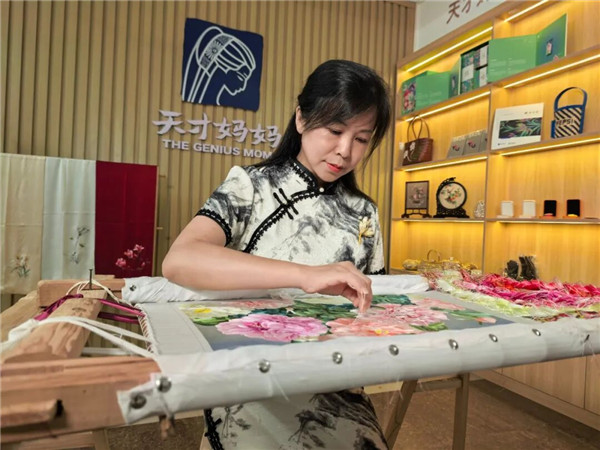
春和景明,万物勃发,在 “三八” 国际妇女节即将来临之际,各行各业的优秀女性正以昂扬姿态绽放别样芳华。从建言献策的政务一线到深耕传承的文化沃土,她们用初心诠释担当,用匠心书写传奇。全国人大代表崔雪琴心系发展,为建设全国统一大市场积极建言,以履职热忱彰显女性参政议政的责任与智慧;第八届国大师钱美荣以丝路为媒,用天山绣针编织文化梦想,让传统技艺在跨界融合中焕发新生;潮绣传承人谢秀华沉浸针线四十余载,于穿针引线间涵养心性,在坚守传承中收获幸福,让千年潮绣在新时代绽放光彩。不同领域,同样精彩,她们以女性独有的坚韧、智慧与温情,在各自赛道上勇毅前行,既为社会发展注入强劲 “她力量”,也为这个春天增添了最动人的色彩。 全国人大代表崔雪琴就建设全国统一大市场建言献策 全国人大代表、石家庄市赞皇县雪芹棉产品开发有限公司董事长崔雪琴接受采访时认为,推进全国统一大市场建设,是为了让每个地方的文化特色和优质产品,都能被看见、被选择。 2025年《计划报告》要求,扎实推进有违统一大市场建设、妨碍公平竞争等领域专项整治。崔雪琴表示,作为土布技艺传承人,也是一家民营企业的负责人,我深深感受到建设全国统一大市场对我们这样的乡土产业是重大的发展机遇。借此机会,我想提3点具体建议:一是建议加大非遗产品的标准互通,就像我们为手工土布制定了全国团体标准,有了共同的尺码,特色产品才能更顺畅地走向全国、走出国门。二是希望进一步打通市场堵点,让带着泥土芳香的品牌能和各地优质产品公平竞争、良性流动。三是期待政策更精准支持、扶持非遗产业,这不仅关乎文化传承,更能实实在在带动就业,让乡亲们在家门口靠手艺增收,共同发展成果。 潮绣传承人谢秀华:在针线中养心,在传承中幸福 “天才妈妈”广东潮州潮绣梦想工坊带头人谢秀华 国家级非物质文化遗产潮绣代表性传承人,“天才妈妈”潮绣梦想工坊的带头人谢秀华,在潮绣的丝线世界里,谢秀华从绣框边的小女孩,成长为非遗传承的点灯人。 从小看着外婆和妈妈飞针走线,她从穿针引线开始,慢慢走进了潮绣的世界。从最初的谋生手艺,到如今肩负的文化使命,她用三十多年的坚守,让潮绣在新时代焕发出别样生机。 她不仅执着于传统技艺的传承,更勇于创新,将潮绣化作胸针、耳坠等日常配饰,让古老技艺走进现代生活;推动“非遗进校园”,打破“传内不传外”的旧规;她更是带领姐妹们加入“天才妈妈”项目,让潮绣走向国际舞台。 特别令人欣慰的是,女儿也接过了传承的接力棒,用数字技术为潮绣注入新活力:建立潮绣基因库,将设计时间从数月缩短至几天。正如她所说:“女儿来做设计不会像我这么累,她能超越我。”这份跨越四代的传承,正是非遗生命力的最美见证。 一根银针,牵引着文化根脉;一缕丝线,串联起女性力量。谢秀华用一针一线,绣出了潮绣的过去、现在与未来,更绣出了自己理想的模样——让潮绣不被时代埋没,让这门养心的技艺,温暖更多人的生命。 第八届国大师钱美荣:丝路织梦 天山绣情 钱美荣,第八届中国工艺美术大师,中国工艺美术大师工作委员会委员,高级工艺美术师,新疆维吾尔自治区非物质文化遗产项目刺绣(汉族)代表性传承人,新疆维吾尔自治区脱贫攻坚先进个人,喀什大学客座教授。 钱美荣出身于刺绣世家,自幼受家族技艺熏陶。八岁起,她便随母亲学习刺绣,从最初的花鸟图案开始,逐渐掌握了苏绣、蜀绣、湘绣、粤绣四大名绣的基本针法和技巧。后辗转到边疆创业,她将四大名绣与新疆民族特色针法、技艺特色结合进行创作,开创出独具特色的“疆绣”风格。从艺三十余年,累计培训3万名刺绣技术人员,带动了木垒、哈密、喀什等地刺绣产业发展。2022年,钱美荣被中国轻工业联合会授予“中国工艺美术大师”荣誉称号。 钱美荣大师的作品风格体现了“融合创新”的显著特征。在刺绣针法上,她将苏绣的平针绣、蜀绣的双面绣、湘绣的掺针绣、粤绣的钉金绣等四大名绣经典针法与维吾尔族的锁边绣、哈萨克族的平绣、蒙古族的缠绣等当地针法巧妙结合,创造出兼具细腻线条与粗犷质感的独特体系。在色彩表现上,她大胆汲取新疆自然与人文的浓烈色调,擅长运用高饱和对比,并通过精妙的渐变与层叠手法,营造出鲜艳夺目而又层次分明的视觉效果。在作品题材上,既有展现祖国壮丽山河、民族团结的宏大叙事,也有刻画边疆风土人情的细腻之作,既有传统工艺的精致典雅,又洋溢着浓郁的地域特色与时代气息,形成了独树一帜的“丝路绣风”,充分展现了中华优秀传统技艺在新疆的创新性发展。其作品多次荣获国家级金项,多作品被国家博物馆、中国美术馆等收藏。 钱美荣大师还积极探索刺绣与扎染、编织等工艺的跨界融合。通过在扎染织物上施绣,或在编织底料上融入毛线绣迹,创造出兼具多种工艺美感、纹理丰富的新形态作品。 钱美荣大师不仅在艺术创作上不断探索创新,更致力于将自己的技艺和经验传授给更多人,培养出一批又一批优秀的刺绣人才,不仅大幅提升了新疆刺绣行业的整体水平,更通过“公司+农户”等模式,使刺绣成为当地妇女增收致富的重要途径,实现了“绣品变商品、绣房变车间、绣娘变匠师”的生动实践。自2000年以来,钱美荣大师奔走于新疆各地的绣坊,累计培训了3万余名各民族绣娘,免费为400多名残疾学生提供刺绣培训。培养的学生中已有15人获评“新疆工艺美术大师”称号,2人在第九届和第十届国际残疾人职业技能竞赛刺绣项目中获得世界冠军。 在新疆广袤的文化沃土上,中国工艺美术大师钱美荣以针为笔、以线为墨,三十余载潜心耕耘,不仅绣出了锦绣山河,更绣出了一条民族技艺传承发展与民生改善相融合的绚丽之路。 《毛主席亲切接见库尔班·吐鲁木》 《塔吉克族新娘》 《胡杨魂》 《和谐新疆》 (来源:中国新闻网、中国轻工业联合会大师委公众号、光明网整理)

来源:中国纺织经济信息网发布时间:
石家庄纺织企业按下经营“快进键”

春节假期过后,河北省石家庄市2000多家纺织服装企业全面开工生产,企业开足马力赶制海内外订单,生产经营按下“快进键”。 春节期间,河北吉藁化纤有限责任公司生产连续运转,腈纶车间、预氧丝车间满负荷生产。“高质量预氧化纤维订单持续火爆。”车间主任潘宏章介绍道,“高性价比的碳纤维应用领域越来越广,市场需求旺盛,假期赶订单、忙生产已成为工作常态”。目前,该车间再添10吨应急防护面料订单和35吨储能电池订单,生产线正开足马力冲刺产能。春节后一开班,纺纱车间、编织车间、制品车间迅速复工,彩纱订单排期至3月末,编织车间正推进经编布、预浸料3K布等多品类订单生产,各环节产销两旺。 2月21日,河北维嘉无纺布股份有限公司春节仅休5天便迅速赶订单。企业2025年引进喷涂生产线,完成平网生产线置换,公司卫材产品全线升级为平网生产设备,2026年,公司将以新产品研发为核心驱动力,推出兼具功能性与环保性的新一代无纺布材料。 2月24日,河北伟宸服装有限公司开工返岗率达98.5%,产能恢复率突破95%,赶制排至6月底的海外订单。2026年一季度公司预计产值3500万元,同比增长15.5%,其“共享车间”模式已带动多家小微企业协同发展。 新春伊始,石家庄纺织服装企业各展所长谋发展。石家庄维宝莱纺织有限公司6万纱锭、400多台喷气织机满负荷生产,产品半数以上销往海外,出口创汇有望再创新高。高邑县得利达纺织有限公司总投资12亿元的30万锭纺纱智能工厂正在加紧建设,建成后将大幅提高产能和品质。河北星天纺织科技有限公司开工后筹备多个国内外行业展会参展,2026年将进一步重视产品研发与品类拓展,持续构建纺纱、织布、染整及成品面料销售多元化、多层次的产品矩阵。 石家庄市纺织行业协会也积极发挥桥梁纽带作用,正在组织会员单位参加即将举行的美国河北商会采购订单发布会、2026年东方国际集团与石家庄市等纺织企业工贸对接会以及2026中国纺联春季联展,帮助企业推介“石家庄造”纺织服装产品,助力石家庄纺企拓展海内外市场。 (来源:石家庄市纺织行业协会)

来源:中国纺织经济信息网发布时间:
香港1月零售业总销货价值同比上升5.5%

香港特区政府统计处4日发表最新零售业销货额数字显示,2026年1月香港零售业总销货价值临时估计为373亿港元,同比上升5.5%;扣除价格变动后,零售业总销货数量同比上升3.4%。 数据显示,1月零售业网上销售价值的临时估计为30亿港元,同比上升25.1%。 按主要类别分析,珠宝首饰、钟表及名贵礼物同比升31.1%,电器及其他未分类耐用消费品同比升38.7%,汽车及汽车零件同比升18.5%,家具及固定装置同比升16.4%,服装、眼镜店、书报文具等亦录得不同幅度增长。 特区政府发言人表示,1月零售业总销货价值继续稳步上升。展望未来,良好的经济增长势头和访港游客数字持续增长将会继续支持香港本地消费,从而有利于零售业务。 (来源:中国新闻网)

来源:中国纺织经济信息网发布时间:
许晓峰调研临江产业园皮革产业发展情况

3月3日,宿松县长许晓峰深入县经开区临江产业园,专题调研皮革产业发展情况。县领导钱友明、周亮参加。 许晓峰一行先后来到亿博皮革园、荷华科技、驰珩皮革、中洋皮革等地,实地察看企业生产车间,与相关负责人交谈,详细了解企业生产经营、市场订单、安全生产、环境管理等情况。 随后,许晓峰与相关单位和企业代表座谈,听取临江产业园皮革产业发展情况汇报,了解企业在发展过程中存在的困难和问题。 许晓峰强调,要坚定发展信心,立足产业基础与比较优势,加强产品研发和科技创新,不断延伸产业链条,增加产品附加值,持续提升企业市场竞争力。要提高管理质效,充分发挥园区管委会作用,优化园区空间布局,完善基础设施配套,健全环保和安全监管模式,为产业发展提供坚强支撑。要主动靠前服务,聚焦企业急难愁盼,强化用水、用电、用能等要素保障,破解企业发展痛点堵点难点。要深化政企协同,强化履约践诺,抓好以商招商,凝聚产业集群发展合力,推动皮革产业扩量提质增效。

来源:宿松融媒发布时间:2026-03-05
蒙山县召开茧丝绸一二三产业高质量发展工作专班专题会

3月4日,广西蒙山县委副书记、县长邱振宇主持召开蒙山县茧丝绸一二三产业高质量发展工作专班专题会,县领导杨立宏、韩格、梁洁铭参加会议。 会议指出,要抢抓“东绸西固”机遇,以茧丝绸全产业链培育为突破口,推动产业向高端化、品牌化转型升级。要坚持品牌引领、品质为王,着力育一批、管一批、选一批、做大一批茧丝绸品牌,统筹推进国家层面、行业层面、地域层面品牌建设,打造既有企业商标特色、又具地域品牌辨识度的优质品牌矩阵;要强化企业品质管理,加大产品抽检力度,以严标准、硬举措推动蒙山县茧丝绸产业高质量发展。 会议强调,要以强化品控管理、培育链主企业为抓手,全面提升本地品牌的公众知名度与市场核心竞争力。既要积极争创国家层面的商标认定与荣誉资质,也要深耕行业领域提升专业认可度,更要立足本土筑牢地域品牌的独特辨识度;相关部门要深入借鉴“六堡茶”品牌打造的成功经验,精准研判、科学确定国家地理标志申报名称,申报工作要坚持“错位竞争”策略,立足自身优势精准发力,必要时引入第三方专业机构开展体系化研究与申报筹备,全力以赴拿下国家地理标志保护产品这一“金字招牌”,为地方特色产业高质量发展筑牢品牌根基。 会议要求,各相关部门要高效协同运转,健全常态化工作推进机制,通过定期调度会商及时破解堵点难点问题,推动各项工作落地见效。在抓实内部推进的同时,要主动加强对外沟通汇报,聚焦产业发展整体方案,积极向上对接,持续提升蒙山桑蚕丝绸产业影响力与知名度,全力争取上级政策、项目等实质性支持,推动产业发展取得更大突破。

来源:蒙山融媒发布时间:2026-03-05
中亚(乌兹)轻纺产品批发商城3月开业

中亚(乌兹)轻纺产品批发商城将于2026年3月在乌兹别克斯坦首都塔什干Goody大厦五楼正式开业,轻纺批发商城展销总面积达4000余平方米,利用地处中亚地区最大的轻纺类产品的批发市场—阿布萨黑市场的优势,面向乌兹别克斯坦及中亚、俄罗斯各国,通过“现场产品展示体验+仓储式批发+线上选品分销平台”的模式进行本土化分销和期货预定。 中亚轻纺产品批发商城为中国企业入驻提供产品从常年展销会、线上线下产品分销、仓储、国际物流、清关、本地配送、回款、加工、售后服务等一系列海外展销一体化服务工作。 乌兹别克斯坦拥有近4000万人口,是中亚地区经济增长最快的第一人口大国,轻纺类产品进口和消费市场潜力巨大。2023年,乌兹别克斯坦纺织业产值同比增长9.8%,出口额已突破35亿美元,已成为中亚地区最大的纺织品集散地和通往独联体市场的核心枢纽。阿布萨黑市场每天有从中国广州、义乌、柯桥、白沟、临沂、乌鲁木齐、喀什等多地直发的货运快车,可拼箱、可整柜、全程固定一次性运费和清关税费等,货物在7-15天内即可运抵塔什干仓库进行交付。 中亚(乌兹)轻纺产品批发商城,针对纺织面料、服装、家纺、鞋帽、箱包、美妆个护、大健康、生活家居等产品,以批发为主、兼具电商零售,轻纺批发商城建立线上用户选品平台、仓储管理系统、Telegram及Uzum等电商分销渠道,利用乌兹当地网红进行直播带货和推广,更整合利用已成熟运营7年的中亚商品展销中心平台与国内各地轻纺产品产业链供应链优势,全年开展20余场展销会、对接会,为中国企业和轻纺类产品出海在中亚地区建立一站式产品跨境分销服务平台,帮助中国产品拓展乌兹本土、中亚、俄罗斯、阿富汗等区域国家市场。 中亚(乌兹)轻纺批发商城,提供轻纺类产品的代展代销、托管销售、自主销售、寄样对接、期货定单等多种海外分销服务模式,更提供从当地公司注册、法律咨询、市场推广、供应链金融、人员落地保障、本地分销团队等‘保姆式’落地服务,破解企业出海困难,助力快速扎根本土、建立竞争优势、可持续性稳健发展。

来源:源明国际发布时间:2026-03-05
共72578条记录
  • 1
  • 2
  • 3
  • 4
  • 6049

产业专题

产业大脑平台

产业经济-监测、分析、

研判、预警

数智招商平台

找方向、找目标、管过程

产业数据库

产业链 200+

产业环节 10000+

产业数据 100亿+

企业数据库

工商 司法 专利

信用 风险 产品

招投标 投融资

报告撰写AI智能体

分钟级生成各类型报告