
😺 🎙️ Watch: It takes 2 years to build a $1B startup now (and 2 weeks to replace 8 years of R&D)

专属客服号

微信订阅号
大数据治理
全面提升数据价值
赋能业务提质增效
Welcome, humans.
Startup seed deals (that fund new companies) are at a
six-year low
. But the total dollars invested? Roughly the same. That means bigger checks are going to fewer companies—and
half of all venture funding
now flows to AI-native startups.
Meanwhile, the timeline to build a billion-dollar startup has compressed from 7–10 years to
2–3 years
. Solo founders are up 10%. And if you slap "AI" on your marketing? One CMO says that's "jazz hands"—and it's backfiring.
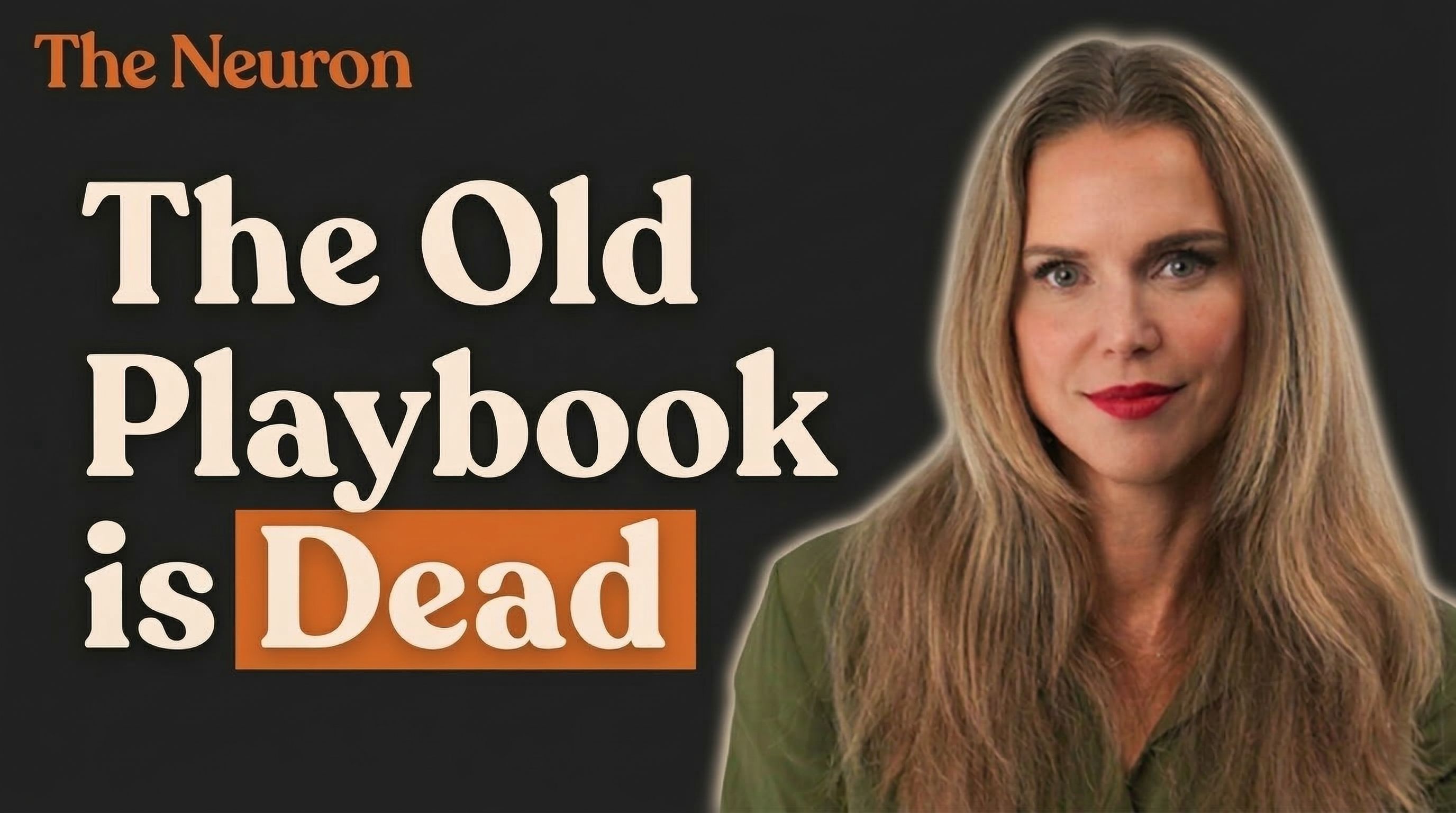
In our
latest podcast episode
, we sat down with
Nicole Baer, CMO of
Carta
, to dig into the most comprehensive startup dataset in private markets—and find out what's actually happening under the hood of the AI boom.
Plus, keep scrolling for our interview with
Dr. Qichao Hu, CEO of
SES AI
, on the AI agents compressing 8 years of battery R&D into 2 weeks, and more!
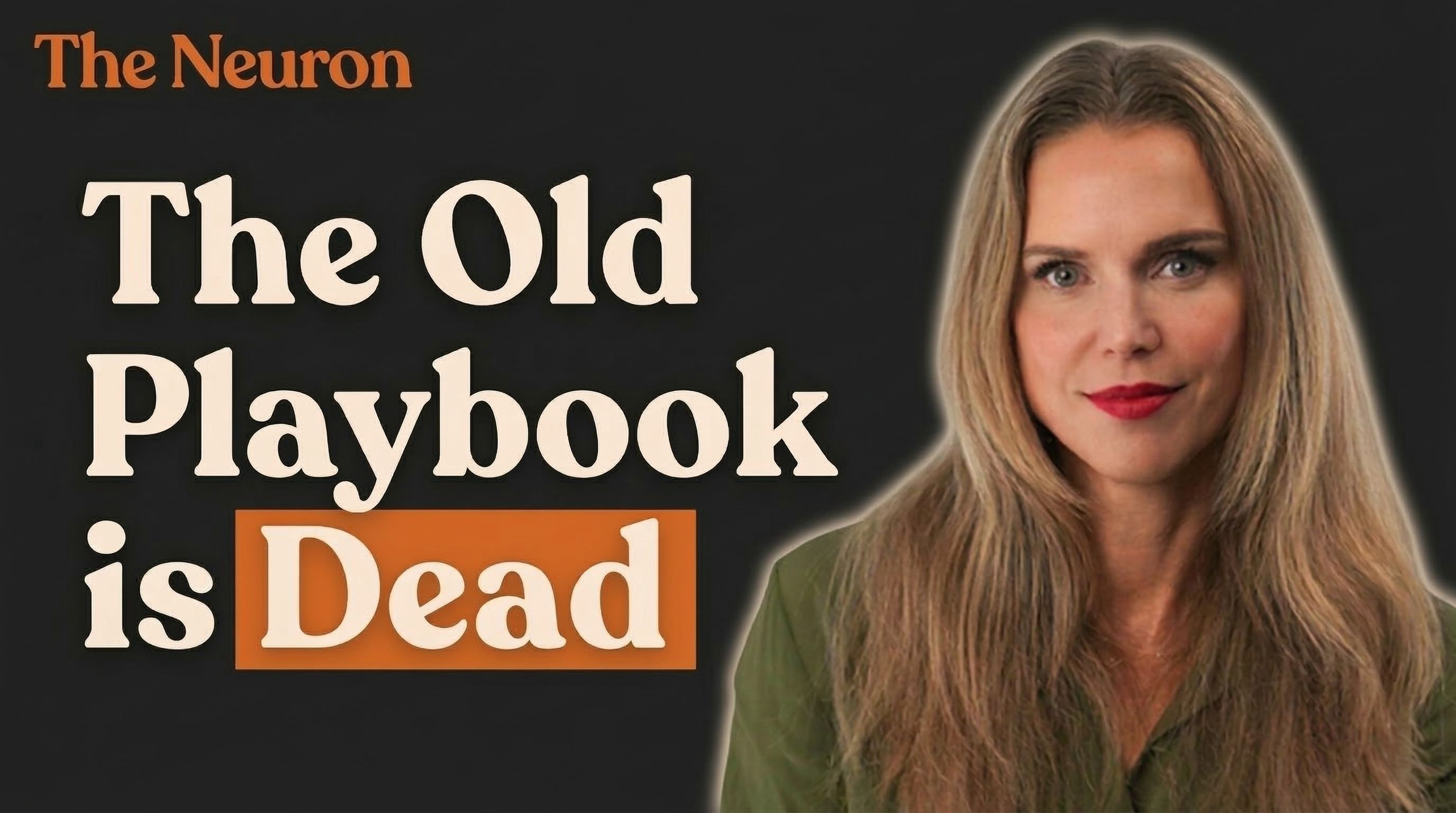
Click the image to watch on YouTube
Here's some of our favorite parts:
(
2:59
)
"Half of all venture funding is going to AI-native startups now. The world of everything else, which used to be 100% of the world, is now 50%."
(
5:52
)
Solo founders are up 10% in five years—and it's entirely because of AI. They're building faster, keeping costs down, and scaling without co-founders or early hires.
(
6:56
)
Startups are hitting $1B in revenue in 2–3 years instead of 7–10. Nicole breaks down why this is becoming the norm, not the exception.
(
14:43
)
"AI in your marketing is jazz hands." Nicole explains why the premium for putting "AI" in your product name is on the wane—and what actually works instead.
(
20:18
)
The dilution surprise: AI companies are commanding massive valuations without giving up more ownership. Founders are getting more money while keeping more of their company.
(
22:26
)
Are we in an AI bubble? Nicole says no—it's a peak that needs to normalize. There's a difference, and she explains it.
(
26:52
)
Nicole's vision for synthetic personas: imagine walking an AI through your entire campaign—billboards, elevators, digital ads, events—and testing how they respond before you spend a dollar.
(
36:04
)
Want to raise money outside the Bay Area? The regional data is "even more true" than before. AI has actually
hardened
San Francisco's grip on startup funding.
(
47:23
)
"AI slop is brand destructive." Nicole's warning: if you don't define your brand, it gets defined along the way—and shortcuts with AI content will cost you.
Why watch this?
Because Carta sits on one of the most comprehensive private-market datasets in the world, and Nicole doesn't hold back. If you're a founder, work at a startup, or invest in them, her point at
(
20:18
)
about valuations and dilution alone is worth your time.
P.S.
Nicole also shared how her team at Carta did a massive Claude analysis of all their sales discovery calls—mapping exactly what happens in the first conversation, what the margins look like, and what assets to deploy at each stage. Work that used to require weeks and consulting firms, done by two product marketers. That's at
(
30:23
)
.
Real quick:
Want to see your AI-adjacent product or service show up right here, below these podcast promos?
Click here to advertise to our 675K readers.

JUST LAUNCHED: NVIDIA’s Kari Briski on Nemotron 3, NemoClaw, and much more.
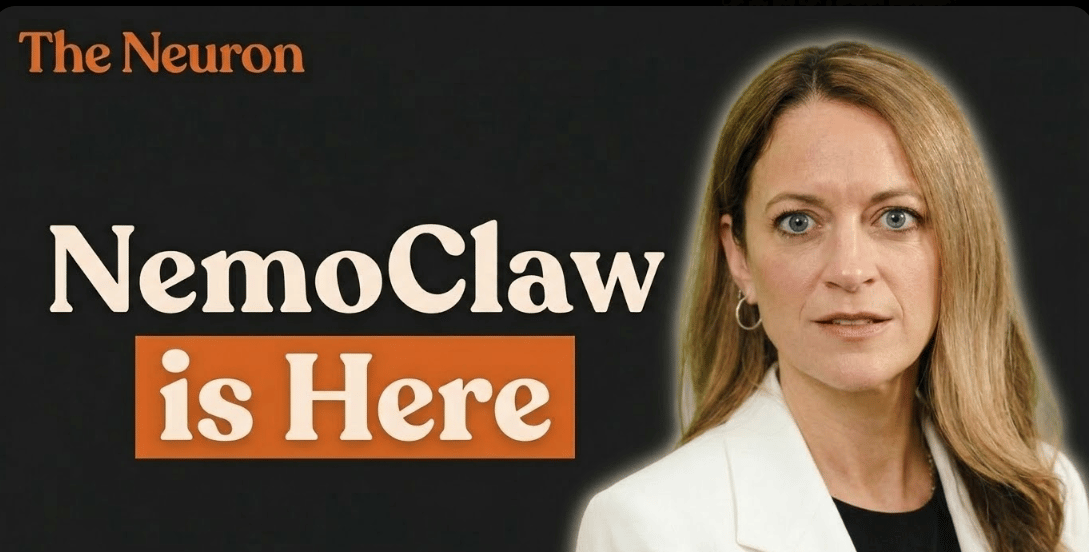
In
our latest podcast episode
, Corey sat down with
Kari Briski
, NVIDIA's VP of Generative AI for Enterprise, live at GTC 2026 to break down the launch of Nemotron 3 and their new NemoClaw agent shell to make running the OpenClaw agent safe and secure.
Check out some of our favorite parts:
(1:45)
What Nemotron 3 Super actually is, and why NVIDIA published their entire model roadmap.
(7:26)
The home GPU reality check: Corey's running 120B parameters on an RTX 4000 at triple the speed of a 70B model.
(8:09)
Why 120 billion parameters only activates 12 billion at a time—and what that means for your hardware.
(13:38)
The wildest AI agent story yet: an NVIDIA dev's AI caught a water leak, texted him, and emailed a plumber.
(17:34)
Open-source AI token generation exploded 35x in one year—here's what's driving it.
(20:49)
Kari's long-term vision: Nemotron as a software development library, not just a model.
P.S.
If you only have 90 seconds, jump straight to
the water leak story at (13:38)
. It's the most convincing AI agent demo we've seen—and it happened by accident.

ALSO THIS WEEK: The AI Rewriting Battery Science (and Maybe Everything Else)
It used to take
8 years
to test whether a new battery material actually works. SES AI just compressed that to
2 weeks
.
In our second new episode this week, we sat down with
Dr. Qichao Hu, Founder, Chairman & CEO of
SES AI
, to understand how his team built
Molecular Universe
—an AI database of
10 trillion small organic molecules
—and paired it with autonomous "wet lab" robots to discover new materials at a pace that was physically impossible before.
This is one of the clearest examples we've seen of AI agents solving hard physical-world problems—not just digital ones.
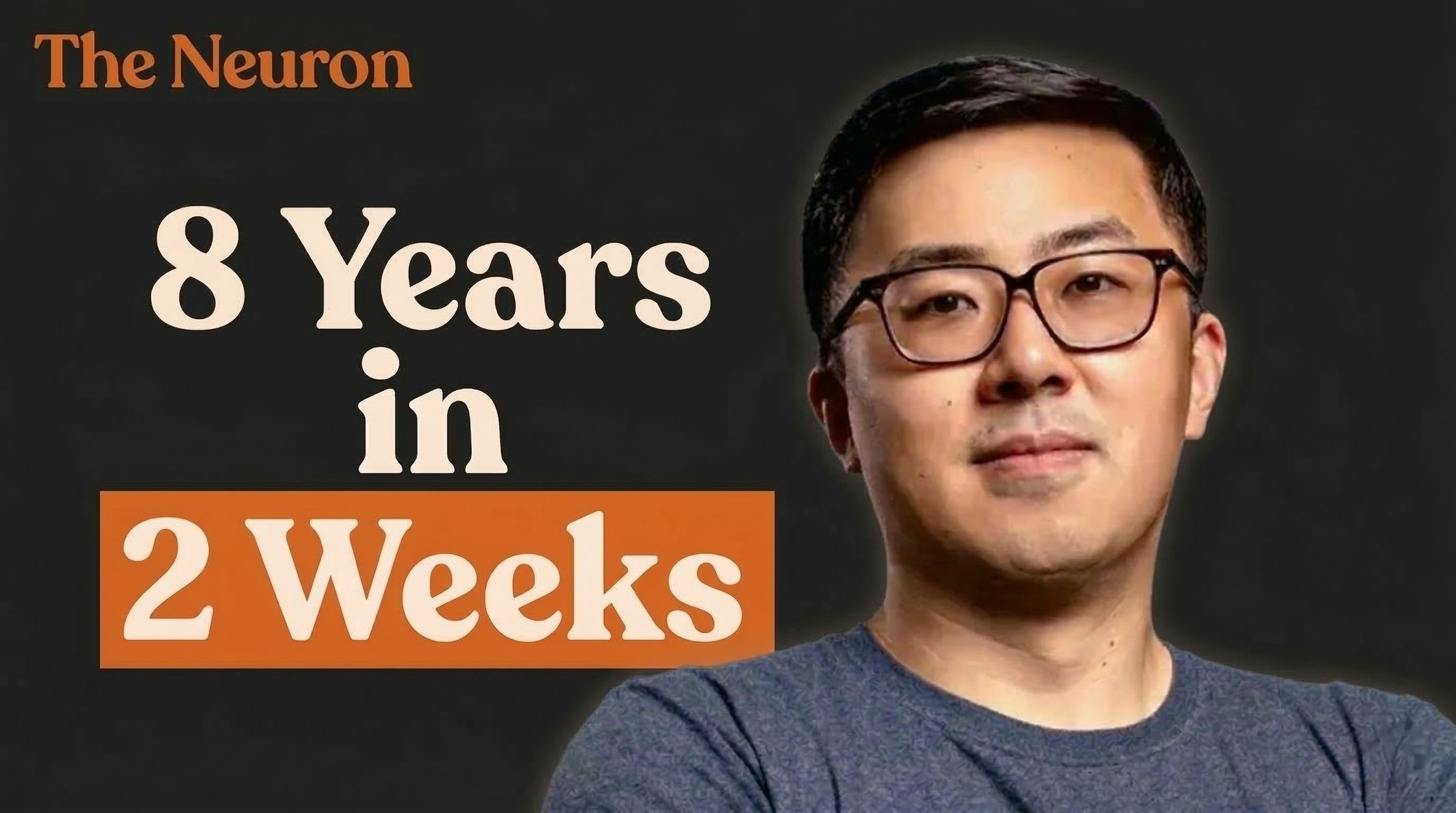
Click the image above to watch on YouTube!
Here's some of our favorite parts:
(
5:28
)
A human scientist reads 3–5 papers a day. Their AI agent processes tens of thousands—with perfect memory. That alone compresses a month of idea creation into minutes.
(
6:30
)
The autonomous robot that runs 5,000 formulations in one morning. A junior scientist does 10–20 by hand. No errors. No coffee breaks.
(
9:14
)
In 40 years, the battery industry screened about 10³ different small molecules. The universe of possibilities? 10⁶⁰.
We've barely scratched the surface.
(
20:05
)
Molecular Universe isn't just for batteries. It's already being used for detergents, cosmetics, pesticides, oil and gas, and paint. The goal: an encyclopedia of every material on Earth.
(
29:00
)
The moment that gave us chills: the AI extracts ~1,000 parameters from battery data. Human scientists can only see 20. The AI's patterns are stronger and more accurate—but we can't explain what they mean. Dr. Hu's words:
"It's like a different language, not meant for us human species to understand. But it works."
(
40:44
)
SES AI extended humanoid robot battery life from 2–4 hours to a full 8-hour shift. When the battery dies, another robot swaps it—so the humanoid never leaves the line.
(
46:08
)
The ultimate flywheel: AI discovers molecules → molecules go into batteries → batteries power the data centers that run the AI.
Here's what makes this even wilder:
according to
The Information
, SES AI's model has already produced
six electrolyte breakthroughs in nine months
—formulations that wouldn't have been possible without the molecular database. Dr. Hu's goal? Fully autonomous, lights-off R&D labs where the only human involvement is the initial prompt. Right now, he says,
"we are at a point where it's, like, half human, half machine."
In case you’re steeped in Silicon Valley culture, that would be short term bullish for the “Centaur”, the AI-human hybrid model.
Why watch this?
Because everyone talks about AI agents in software. This is AI agents in
science
—discovering materials, running real-world experiments, and finding patterns in physics that humans literally cannot perceive. If you want to see what "AI in the real world" actually looks like, start at
(
29:00
)
.
P.S.
We also asked Dr. Hu about AR glasses—one of the biggest power-constrained products in tech right now. Turns out, some companies are already using Molecular Universe to try to solve that exact problem. That's at
(
44:30
)
.
Also, after the interview, we asked him about sodium batteries (a personal passion area of Grant’s) and he suggested that sodium is actually one of the most searched topics on Molecular Universe after lithium.
Gee, wonder why…
(lots of progress in this area, like
here
,
here
,
here
, and
here
).
Dive deeper with these resources:
Carta's free startup data & insights
The Information's coverage of SES AI's breakthroughs
Artificial Analysis—compare top AI models
Stay curious,
The Neuron Team.
P.S.
If you missed it, Dr. Hu's episode is one of our favorite conversations we've had. An AI that speaks a language humans literally can't understand, but produces results that are more accurate than anything we can do ourselves? Yeah, that one stuck with us. 🔋
And if you
haven’t subscribed yet, please do!
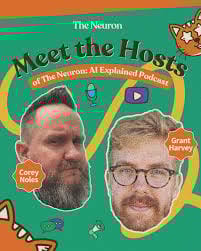
Click the image below to go to our channel and hit “subscribe” to get notified right when new videos go live.

We have a goal to hit 50K subscribers by the end of the year (if not 100K), and
we’re almost to 20K!
If you like learning about AI, and already watch some of our videos,
do us a favor and click here to subscribe
today.
Stay curious,
The Neuron Team
 |
|

P.P.S:
Love the newsletter, but don’t want to receive these podcast announcement emails? Don’t unsubscribe —
adjust your preferences to opt out of them here instead
.