
How NVIDIA-Deloitte Partnership Advances Physical AI

专属客服号

微信订阅号
大数据治理
全面提升数据价值
赋能业务提质增效
How NVIDIA-Deloitte Partnership Advances Physical AI

From language models to systems that embody intelligence, AI has come a long way in recent years.
This advancement means that digital twin technologies, robotics and immersive simulation tools have quickly moved from experimentation to being central components of competitive manufacturing and logistics strategies.
In this context, when Deloitte announced a major expansion of its physical AI capabilities through a deepened collaboration with tech giant, NVIDIA, it came as welcome news for those admirers and users of the industrial metaverse.
“Physical AI is moving fast from experimentation to real-world deployment, and changing how work is performed,” says Nitin Mittal, Deloitte Global AI leader.
“By leveraging NVIDIA’s advanced technology stack with Deloitte’s engineering expertise and deep industry knowledge, we are helping organizations to build new intelligent physical spaces in the age of AI.”
The initiative aims to help organisations accelerate industrial transformation by leveraging advanced simulation, computer vision and secure edge computing technologies to bridge the gap between digital planning and real-world operations.
The Deloitte-NVIDIA partnership
At the heart of Deloitte’s announcement is an expansion of its long-standing partnership with technology provider NVIDIA.
Together, they are developing solutions built on NVIDIA’s set of simulation and digital twin libraries designed to mirror physical environments in detailed virtual models.
The new Deloitte services will be powered by NVIDIA Omniverse Enterprise, NVIDIA Riva, NVIDIA Omniverse Avatar Cloud Engine and NVIDIA Metropolis among others.
“AI and metaverse technologies are reshaping the foundations of our economy,” says Jensen Huang, Founder and CEO of NVIDIA.
“Together, NVIDIA and Deloitte can help enterprises apply AI to create new products and services that reinvent their industries.”
Deloitte engineers are integrating these tools into practical, outcome-orientated offerings that help clients simulate decisions, manage complex operations and deploy embodied AI systems at scale.
The combination of deep industry knowledge, engineering expertise and a robust technology foundation enables organisations across sectors to tackle real-world challenges with confidence.
What is physical AI and why it matters
Physical artificial intelligence refers to systems that perceive, understand and act in the real world rather than only processing data in isolation.
For industrial users, this includes robots that navigate factory floors, sensors that detect anomalies in equipment and simulation platforms that model complex environments before physical deployment.
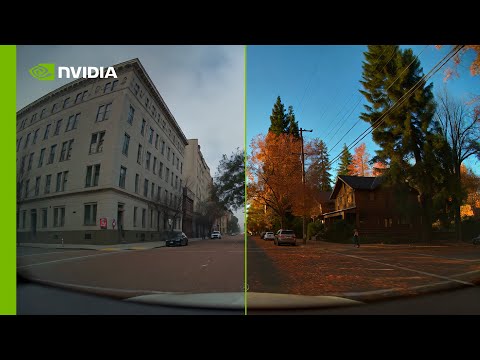
A recent State of AI in the Enterprise report found that more than half of firms (58%) are already using physical AI in some form, with adoption expected to rise significantly (80%) in the next two years.
This shift is significant because it moves AI from back-office analytics to operational decision-making on the ground.
Not only can physical AI help reduce downtime by predicting faults before they escalate, it can also accelerate how quickly new technology is safely scaled into production environments.
Deloitte’s physical AI applications
When digital twins built with NVIDIA Omniverse Libraries are integrated with AI, AR and VR technologies, users gain access to immersive simulations of industry operations.
These will allow businesses to visualise and optimise workflows before committing to expensive physical changes.

Using digital twin models, planners can test factory reconfigurations or assess logistical flows to improve efficiency and safety, while cutting costs.
By leveraging NVIDIA’s open robotics frameworks – such as NVIDIA Isaac Sim and NVIDIA Cosmos – and synchronising workloads between edge devices and cloud systems, with NVIDIA Jetson Thor, companies can deploy intelligent agents with stronger operational resilience.
The company says: “In the life sciences industry, Deloitte is helping companies scale operations using humanoid systems that integrate simulation, synthetic data, teleoperation, and sim-to-real validation – accelerating the safe, practical deployment of embodied intelligence across operations.”
Deloitte can help clients interpret the world, through advanced computer vision tools that use both real and synthetic data to improve detection and reasoning in physical spaces.
One early example of this work took place at an automotive plant in Spain, where Deloitte’s physical AI tools were used to predict equipment faults and enhance inspection processes as part of an internal operational efficiency initiative.
“As the demand for physical AI and digital twin technologies accelerates, enterprises are moving beyond exploration to optimise complex operations and enhance real-world decision-making,” says Deepu Talla, vice president of Robotics and Edge AI at NVIDIA.
“Fusing NVIDIA’s full-stack physical AI platform with Deloitte’s industry experience provides a scalable path for organisations to move intelligent systems into full-scale production faster via simulation.”
To scale these innovations, Deloitte is establishing a global network of physical AI centres of excellence.
A new centre in Shanghai represents its first major expansion, bringing together technical capabilities, industry partnerships and consulting expertise to help clients take physical AI from pilot projects into full production.

Executives

Deepu Talla
Vice President and General Manager - Robotics & Edge AI
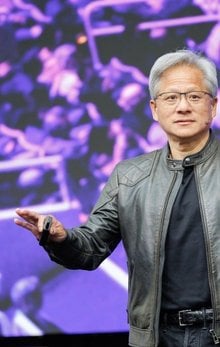
Jensen Huang
Founder and CEO

Nitin Mittal
Principal | Global AI Leader